
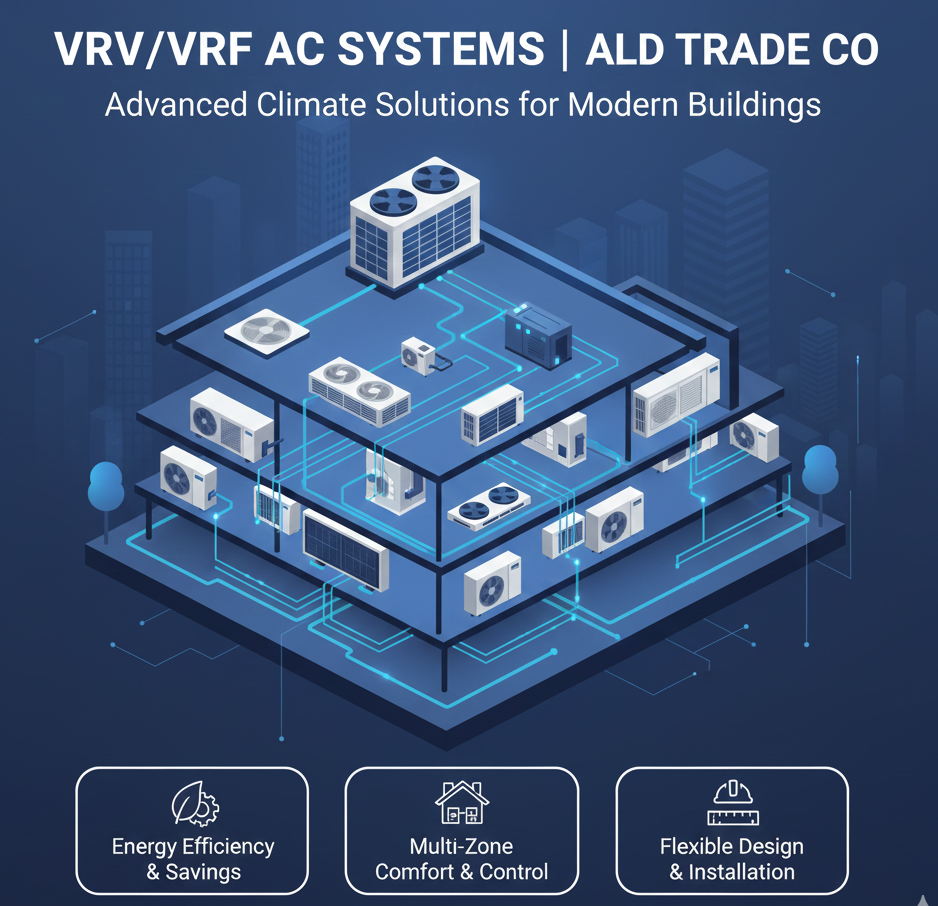
Delhi’s luxury hotels face intense cooling demands from year-round high occupancy, varying room usage, and the city’s extreme heat (often exceeding 45°C). Traditional AC systems waste energy by cooling unoccupied spaces uniformly, but VRV/VRF (Variable Refrigerant Volume/Flow) systems revolutionize hotel HVAC with precise zoning, simultaneous heating/cooling, and superior energy efficiency. These modular systems connect one outdoor unit to multiple indoor units, allowing individual room control while minimizing energy use.
What Makes VRV/VRF Ideal for Delhi Hotels?
VRV/VRF systems use inverter technology and electronic expansion valves to vary refrigerant flow precisely to each indoor unit. Key advantages for hotels:
- Individual Room Zoning: Guests control temperatures independently (e.g., 22°C in suites, 25°C in corridors) without affecting others.
- Energy Savings: Up to 40% lower consumption via variable compressor speed and heat recovery (cool one wing while heating another).
- Scalability: Modular design expands easily for hotel renovations or expansions.
- Quiet Operation: Indoor units as low as 19 dB, perfect for guest rooms.
- Delhi Climate Resilience: Wide operating range (-5°C to 54°C), handling summer peaks and winter chills.
Zoning Flexibility: Tailored Comfort for Hotel Guests
Zoning is VRV/VRF’s standout feature for hotels:
- Multi-Zone Control: One outdoor unit serves 16-64 indoor units (cassettes, ducts, wall-mounts) across floors/wings.
- Guest-Centric Features: Keycard integration turns off unoccupied rooms; occupancy sensors auto-adjust.
- Hotel-Specific Applications: Independent control for banquet halls (high load), lobbies (moderate), and spas (precise humidity).
Zoning Cost Example: 10-room hotel wing – ₹15-25 lakhs for 48 indoor units + 4 outdoor modules.
Energy Savings Breakdown for Delhi Hotels
Delhi’s high electricity tariffs (₹8-12/unit) amplify VRV/VRF ROI:
| Traditional AC vs VRV/VRF | Annual Energy Cost (100 Rooms) | Savings % | Payback Period |
|---|---|---|---|
| Fixed-Speed Split/Ducted | ₹45-60 Lakhs | – | – |
| VRV/VRF with Zoning | ₹25-35 Lakhs | 30-40% | 3-5 Years |
Savings Drivers:
- Variable refrigerant flow matches load precisely.
- Heat recovery VRF transfers heat between zones.
- IoT/BMS integration for predictive optimization.
Real-world: Delhi NCR hotels report 35% bill reductions post-VRV upgrade.
Setup Costs and Installation Guide for Delhi Hotels
Typical Costs (2026 Delhi NCR):
Breakdown: Equipment (60%), Piping/ducting (20%), Electrical (10%), Commissioning (10%).
Installation Steps:
- Site Survey: Assess load (BTU/sq ft), zoning needs.
- Design: Modular outdoor units on rooftops; concealed indoor units.
- Piping: Refrigerant lines up to 165m long, with oil traps for high-rises.
- BMS Integration: Link to hotel PMS for keycard/occupancy control.
- Commissioning: Balance airflow, test zoning (1-2 weeks).
Delhi factors: Pollution-resistant coils, voltage stabilizers mandatory.
Top VRV/VRF Brands for Delhi Hotels
ROI Calculation for Hoteliers
Example: 100-room Delhi hotel
- Investment: ₹120 Lakhs
- Annual Savings: ₹20 Lakhs (energy + maintenance)
- ROI: 6 years; extended by guest satisfaction/up-sell.
Maintenance: Annual contracts ₹2-5 Lakhs; modular design cuts downtime 50%.
Why ALD TRADE CO for Delhi Hotel VRV/VRF Setup?
ALD TRADE CO excels in hotel HVAC with:
- End-to-end design-installation for 5-star properties.
- Daikin/Hitachi authorized partnerships.
- GRAP-compliant air purification integration.
- 24/7 support, AMC for zoning optimization.
Elevate your Delhi hotel’s cooling—contact ALD TRADE CO for a free VRV audit!
Call: +91-9211392655 | aldtradeco.com
Resources
VRV/VRF systems transform Delhi hotels from energy drains to efficient assets, delivering zoned luxury cooling with rapid ROI. Partner with experts like ALD TRADE CO for seamless implementation tailored to your property’s scale and Delhi’s demands.